Being Mortal: Medicine and What Matters in the End by Atul Gawande (2014)
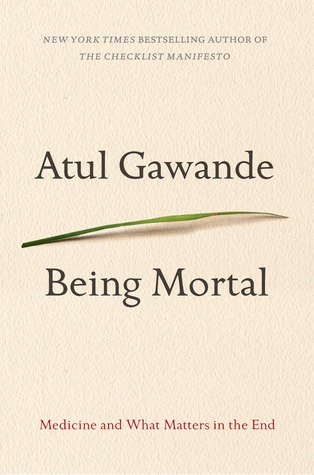
The puzzle of death is one that many religions claim to answer, though I suspect few, no matter how pious, devoted, or faithful, could with a sense of certainty honestly say they feel comfortable they understand it. Perhaps that is why those who embody what we don't understand - and therefore often fear - are so often looked upon as analytical problems to be solved with the outcome of prolonged living.
This book dares to challenge all of us - both medical professionals and people like me, non-professionals who inevitably find ourselves at one time or many times helping people we know and perhaps love reach their end. The challenge is one of humaneness. It's one of respecting the wishes of the dying, and honoring their dignity.
Filled with stories, including of the author's own father's journey toward death, Gawande's book brings emotion to a clinical issue, and that's the way I think it should be.
Tuesday, March 22, 2016
Monday, March 21, 2016
Bhagavad Gita: The Oxford Centr for Hindu Studies Guide by Nicholas Sutton (2014)
The study of religion and religions, both for intellectual learning and for spiritual exploration, has constituted a large part of my mental world for my entire adult life. Now in midlife, I'm starting to reconcile my desire to "land" in a religious home with the fact that said landing is unlikely to happen in a predefined way. I've accepted that it's just fine for me to go where the wind takes me. Every year, I take that "Belief-O-Matic" quiz online (link), and every year, my top two are Neopagan and Unitarian Universalist. So the world is my buffet, and there's no shame in that.
This is my second translation of the Gita, which I picked up because I liked the way it dealt with commentary. No footnotes on this one. Here are four or five verses, and then some commentary, with a summary at the end of each chapter. I don't know Sanskrit, so I don't have the tools to comment on the translation. The commentary includes many references to how certain phrases were translated, however. The commentary also gives nods to different ways certain passages have been interpreted by different schools of thought. This was personally gratifying to me, because it told me that not everyone in the Hindu thinking world thinks that each of us is God. Happily, Nicholas Sutton does not take sides, though he will give his academic opinion regarding which interpretation seems to be most likely to be the intended one.
I have learned a lot, and will keep this electronic text (which is only available as an e-book). I spent a lot more time than usual on my first read-through. I didn't see a point in rushing it. I read small portions at a time. I also discovered that there is much here that affirms and adds to what I've been observing spiritually on my own.
The previous translation I read was for a course in Indian philosophy. It was Barbara Stoller Miller's, which is also very accessible and was perfect for the context of that class.
The study of religion and religions, both for intellectual learning and for spiritual exploration, has constituted a large part of my mental world for my entire adult life. Now in midlife, I'm starting to reconcile my desire to "land" in a religious home with the fact that said landing is unlikely to happen in a predefined way. I've accepted that it's just fine for me to go where the wind takes me. Every year, I take that "Belief-O-Matic" quiz online (link), and every year, my top two are Neopagan and Unitarian Universalist. So the world is my buffet, and there's no shame in that.
This is my second translation of the Gita, which I picked up because I liked the way it dealt with commentary. No footnotes on this one. Here are four or five verses, and then some commentary, with a summary at the end of each chapter. I don't know Sanskrit, so I don't have the tools to comment on the translation. The commentary includes many references to how certain phrases were translated, however. The commentary also gives nods to different ways certain passages have been interpreted by different schools of thought. This was personally gratifying to me, because it told me that not everyone in the Hindu thinking world thinks that each of us is God. Happily, Nicholas Sutton does not take sides, though he will give his academic opinion regarding which interpretation seems to be most likely to be the intended one.
I have learned a lot, and will keep this electronic text (which is only available as an e-book). I spent a lot more time than usual on my first read-through. I didn't see a point in rushing it. I read small portions at a time. I also discovered that there is much here that affirms and adds to what I've been observing spiritually on my own.
The previous translation I read was for a course in Indian philosophy. It was Barbara Stoller Miller's, which is also very accessible and was perfect for the context of that class.
Sunday, March 20, 2016
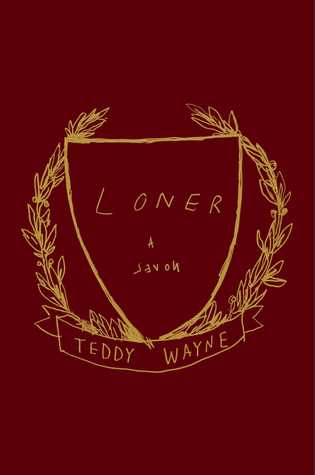
Loner, a novel by Teddy Wayne. Expected to publish 9/13/2016 by Simon & Schuster
Loner is very readable. The main character, David, has a strange kind of charm, and a different way of speaking, which personally I liked. His perspective is skewed; he's defensive and as he does the manipulative and downright disturbing things he does to other characters in his small circle of peers, playing them off of each other, using them to reach deluded goals, it seems undeniable that he really buys into the untruths he tells himself. This part is quite effective: he is a stalker, but he doesn't really see himself that way. By "effective" I mean to say that I found him to be successfully creepy.
And now that I've finished writing my review I feel it best to put the large middle section as a spoiler. I do give away significant plot points here!
SPOILER BEGINS HERE!
Do I believe a person could really be that naive and directed at the same time? I guess so, as I myself find myself missing cues not given to me succinctly. But directed? I don't know about that in this circumstance. David really wants Veronica. His manipulations, for the most part, are relatively innocent on the surface, showing up where she is and pretending it's coincidental, for example. So maybe, in the end, when he attempts to rape Veronica after he discovers how she may have been manipulating him all along, I can accept that he felt he had a chance with her if he just showed her what a great guy he was.
But what he does to Sarah in order to get closer to Veronica, well, that's pretty directed and at the very best, cynical. While he may not be as cunning as Veronica, he's definitely as cynical.
Overall, I experienced several things in reading Loner.
...a strange longing to revisit my own college experience, at least for the first quarter of the book, because I sheltered myself too much to have experienced the darkness explored here, and the personalized response dissipated pretty quickly when the stalking began.
...a growing dis-ease and eventually dread
...a mixed reaction by the ending...was it too predictable? was the author trying too hard to build a psychological case to explain the character's actions?
SPOILER ENDS HERE!
I don't know what to make of the book, to be utterly honest. I liked reading it. It's a good example of "the unreliable narrator." I just don't know if the author wants me to take his novel as a warning, a character study, a philosophical exercise, a social commentary, something else, or a combination of these. I suppose I'm bothered not because of unanswered questions, which is never a point against a work of art for me, but because I truly feel I am left flailing with these questions, and plugging potential answers into the final product leaves results which seem to me to be not quite right, and I'm left with puzzlement and not much else.
My gratitude to the publisher for an ARC of this book.
Loner is very readable. The main character, David, has a strange kind of charm, and a different way of speaking, which personally I liked. His perspective is skewed; he's defensive and as he does the manipulative and downright disturbing things he does to other characters in his small circle of peers, playing them off of each other, using them to reach deluded goals, it seems undeniable that he really buys into the untruths he tells himself. This part is quite effective: he is a stalker, but he doesn't really see himself that way. By "effective" I mean to say that I found him to be successfully creepy.
And now that I've finished writing my review I feel it best to put the large middle section as a spoiler. I do give away significant plot points here!
SPOILER BEGINS HERE!
Do I believe a person could really be that naive and directed at the same time? I guess so, as I myself find myself missing cues not given to me succinctly. But directed? I don't know about that in this circumstance. David really wants Veronica. His manipulations, for the most part, are relatively innocent on the surface, showing up where she is and pretending it's coincidental, for example. So maybe, in the end, when he attempts to rape Veronica after he discovers how she may have been manipulating him all along, I can accept that he felt he had a chance with her if he just showed her what a great guy he was.
But what he does to Sarah in order to get closer to Veronica, well, that's pretty directed and at the very best, cynical. While he may not be as cunning as Veronica, he's definitely as cynical.
Overall, I experienced several things in reading Loner.
...a strange longing to revisit my own college experience, at least for the first quarter of the book, because I sheltered myself too much to have experienced the darkness explored here, and the personalized response dissipated pretty quickly when the stalking began.
...a growing dis-ease and eventually dread
...a mixed reaction by the ending...was it too predictable? was the author trying too hard to build a psychological case to explain the character's actions?
SPOILER ENDS HERE!
I don't know what to make of the book, to be utterly honest. I liked reading it. It's a good example of "the unreliable narrator." I just don't know if the author wants me to take his novel as a warning, a character study, a philosophical exercise, a social commentary, something else, or a combination of these. I suppose I'm bothered not because of unanswered questions, which is never a point against a work of art for me, but because I truly feel I am left flailing with these questions, and plugging potential answers into the final product leaves results which seem to me to be not quite right, and I'm left with puzzlement and not much else.
My gratitude to the publisher for an ARC of this book.
Sunday, March 6, 2016
The Funny Thing Is... by Ellen DeGeneres (2003)
I could almost leave a rating off of this, because the rating is irrelevant. the reason for this is that some of these chapters are five-star hilarious and some were zero-star non-chapters.
A non-chapter is one which just passed and you didn't notice it, because nothing happened and if it did it was neither insightful nor funny.
And if there are things in a chapter which give me the wet giggles, that's five stars. The phrase "freshly washed monkey" is enough for me.
What does this mean? Who cares? It's comedy. I'm happy to spend time with Ellen DeGeneres, because her personality comes through even when I'm not sure what the hell she's doing.
Chronological tidbit: This book was released just before her talk show started.
I could almost leave a rating off of this, because the rating is irrelevant. the reason for this is that some of these chapters are five-star hilarious and some were zero-star non-chapters.
A non-chapter is one which just passed and you didn't notice it, because nothing happened and if it did it was neither insightful nor funny.
And if there are things in a chapter which give me the wet giggles, that's five stars. The phrase "freshly washed monkey" is enough for me.
What does this mean? Who cares? It's comedy. I'm happy to spend time with Ellen DeGeneres, because her personality comes through even when I'm not sure what the hell she's doing.
Chronological tidbit: This book was released just before her talk show started.
Monday, February 29, 2016
Book Review
The Boy in the Mirror by Tom Preston (2015)
Immersion, we learn in introductory linguistics, is a mysterious and effective way to become conversant in a language. Want to know German? Land yourself in small town in Germany where few speak in English, and don't go with a friend - no crutches. Eventually, after a period of confusion and frustration, you'll discover you understand everything.
That's what they say. Reading The Boy in the Mirror is immersion into sickness and the extremely surreal world of tortuous healing. Poisoning the body to rid it of what is killing it. Chemotherapy for severe cancer, in the body of a young man on the cusp from adolescence to early adulthood.
The immersion is so real, so intense, that I feel I may need to purge toxins from my own body. I feel a cramp in my chest and I am chillingly aware of my own physical and mental fragility. Tom wrote this memoir to heal, he says in the afterward, as he does not pretend to be over the experience. As I was reading I wondered, wouldn't four months of aggressive chemotherapy give a person a profound case of PTSD?
I imagine so.
The delusions, the symptoms, the misery, the depression, the restlessness, the yearning, the comfort and sadness of memories and the cruel teasing of every bodily sense that comes through in this book? They were all my own even as Preston was describing his experience to us. He's a gifted writer, and - not a mere gimmick - the presentation of the material in the second person seals the effectiveness completely.
I don't know what else to say. The book flies by. It's not always a pleasant read, and yet, oddly, it is. It is because while it takes you into the lowest pit, it gives you the lifeline of hope, and it does so concretely and at the same time, absurdly, by appealing to the mystical within us.
Reviewed with great thanks to Netgalley and Inpress Books/Valley Press
The Boy in the Mirror by Tom Preston (2015)
Immersion, we learn in introductory linguistics, is a mysterious and effective way to become conversant in a language. Want to know German? Land yourself in small town in Germany where few speak in English, and don't go with a friend - no crutches. Eventually, after a period of confusion and frustration, you'll discover you understand everything.
That's what they say. Reading The Boy in the Mirror is immersion into sickness and the extremely surreal world of tortuous healing. Poisoning the body to rid it of what is killing it. Chemotherapy for severe cancer, in the body of a young man on the cusp from adolescence to early adulthood.
The immersion is so real, so intense, that I feel I may need to purge toxins from my own body. I feel a cramp in my chest and I am chillingly aware of my own physical and mental fragility. Tom wrote this memoir to heal, he says in the afterward, as he does not pretend to be over the experience. As I was reading I wondered, wouldn't four months of aggressive chemotherapy give a person a profound case of PTSD?
I imagine so.
The delusions, the symptoms, the misery, the depression, the restlessness, the yearning, the comfort and sadness of memories and the cruel teasing of every bodily sense that comes through in this book? They were all my own even as Preston was describing his experience to us. He's a gifted writer, and - not a mere gimmick - the presentation of the material in the second person seals the effectiveness completely.
I don't know what else to say. The book flies by. It's not always a pleasant read, and yet, oddly, it is. It is because while it takes you into the lowest pit, it gives you the lifeline of hope, and it does so concretely and at the same time, absurdly, by appealing to the mystical within us.
Reviewed with great thanks to Netgalley and Inpress Books/Valley Press
Book Review
The Planets, by Dava Sobel (2005)
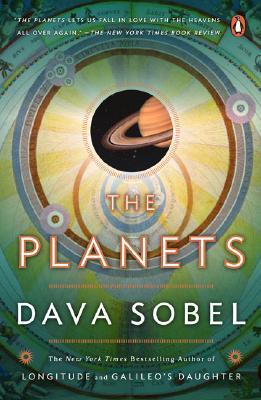
Confession time: I originally perused this book because the cover is beautiful.
As a child, I was fascinated with astronomy. As a college Freshman, I took an astronomy course and dropped out after a few weeks. Perhaps now I would be able to grasp the difficult mathematics required for even elementary-level space science. Perhaps. But I think I'm better off with a text like The Planets, which dives into the fascinating history (and indeed much of the science) of our solar system with a sense of whimsy and poetry.
Unlike, apparently, some who have written reviews of this book, I read a few pages before buying it. I do that regardless of topic or genre. To begin reading something is an investment of my time and energy. I've read criticisms of the approach used here, and I don't understand how that approach wasn't apparent from the beginning. I guess this isn't my problem, but I feel a bit sad to read negative reviews by people who really are not within the intended audience here. This is beginning-level stuff, surely, for a general readership with an interest in, not an expertise with, the material.
I know I haven't retained a lot of the specifics Dava Sobel has shared here, but that's not to say I haven't learned a lot. I also have a strong appreciation for how Sobel shaped each chapter, each treatment of individual bodies of the solar system. I'm happy to have read it.
The Planets, by Dava Sobel (2005)
Confession time: I originally perused this book because the cover is beautiful.
As a child, I was fascinated with astronomy. As a college Freshman, I took an astronomy course and dropped out after a few weeks. Perhaps now I would be able to grasp the difficult mathematics required for even elementary-level space science. Perhaps. But I think I'm better off with a text like The Planets, which dives into the fascinating history (and indeed much of the science) of our solar system with a sense of whimsy and poetry.
Unlike, apparently, some who have written reviews of this book, I read a few pages before buying it. I do that regardless of topic or genre. To begin reading something is an investment of my time and energy. I've read criticisms of the approach used here, and I don't understand how that approach wasn't apparent from the beginning. I guess this isn't my problem, but I feel a bit sad to read negative reviews by people who really are not within the intended audience here. This is beginning-level stuff, surely, for a general readership with an interest in, not an expertise with, the material.
I know I haven't retained a lot of the specifics Dava Sobel has shared here, but that's not to say I haven't learned a lot. I also have a strong appreciation for how Sobel shaped each chapter, each treatment of individual bodies of the solar system. I'm happy to have read it.
Book Review
The Expendables: Stories by Antonya Nelson (1989)
This book came out in 1989, my second year of college. I was 19, and beginning to embrace what became a failed hope that I would pursue the writer's life, specifically in fiction, and my first creative writing instructor at the college level was Antonya Nelson at New Mexico State University. It was from her that I learned quite a bit, including the somewhat earth-shattering news that there was such a thing as literary fiction. Literary fiction, to my not-quite-adult mind, was basically non-genre fiction. Later I'd learn about magical realism, and even later I learned about post-modernism, but one of the most difficult things for me to get around was channeling my imagination into a literary, non-genre sphere. I don't know that I ever really mastered that.
The more important message, though, something I still embrace and about which I learn more every time I explore the Genre (capital-G, which has to do with a different level of the writing sphere: capital-G for me encompasses Fiction, Poetry, Non-Fiction, Playwriting...and within that, you have Short Stories verses Novels, for example), is that short stories and novels are quite different.
I remember a conversation we had, about how frequently, if a novel can do the same thing as a short story, why would someone write a novel instead? I suspect that it has to do with "what sells" and that's even more true now than it was twenty-five years ago. Do people outside of college-level creative writing programs buy short story collections anymore, other than those written by Stephen King?
I hope so.
Nelson is a master of the short story. The Expendables was her first collection, for which she won the Flannery O'Connor award for short fiction (if you've read the other reviews, you already know this), and whose book jacket bears a blurb from none other than Raymond Carver.
There are a few occasions where the writer's hand is perhaps too visible. The most obvious for me is in "Helen in Hollywood," but even therein the content, if not the telling, is strong. Others may disagree, of course.
My favorite part of the book are the penultimate two stories, the paired "Mud Season" and "Looking for Tower Hall," about a family recovering from the sudden and bewildering death of one of its members. There are many other strong stories here, and I certainly recommend it to those who like their fiction to explore (and thereby reveal) the humanity within the internal process of living, and questioning, one's place within the specific relationships people find themselves. I revisited the collection this month, and I'm so glad I did. I'm an adult now, after all.
The Expendables: Stories by Antonya Nelson (1989)
This book came out in 1989, my second year of college. I was 19, and beginning to embrace what became a failed hope that I would pursue the writer's life, specifically in fiction, and my first creative writing instructor at the college level was Antonya Nelson at New Mexico State University. It was from her that I learned quite a bit, including the somewhat earth-shattering news that there was such a thing as literary fiction. Literary fiction, to my not-quite-adult mind, was basically non-genre fiction. Later I'd learn about magical realism, and even later I learned about post-modernism, but one of the most difficult things for me to get around was channeling my imagination into a literary, non-genre sphere. I don't know that I ever really mastered that.
The more important message, though, something I still embrace and about which I learn more every time I explore the Genre (capital-G, which has to do with a different level of the writing sphere: capital-G for me encompasses Fiction, Poetry, Non-Fiction, Playwriting...and within that, you have Short Stories verses Novels, for example), is that short stories and novels are quite different.
I remember a conversation we had, about how frequently, if a novel can do the same thing as a short story, why would someone write a novel instead? I suspect that it has to do with "what sells" and that's even more true now than it was twenty-five years ago. Do people outside of college-level creative writing programs buy short story collections anymore, other than those written by Stephen King?
I hope so.
Nelson is a master of the short story. The Expendables was her first collection, for which she won the Flannery O'Connor award for short fiction (if you've read the other reviews, you already know this), and whose book jacket bears a blurb from none other than Raymond Carver.
There are a few occasions where the writer's hand is perhaps too visible. The most obvious for me is in "Helen in Hollywood," but even therein the content, if not the telling, is strong. Others may disagree, of course.
My favorite part of the book are the penultimate two stories, the paired "Mud Season" and "Looking for Tower Hall," about a family recovering from the sudden and bewildering death of one of its members. There are many other strong stories here, and I certainly recommend it to those who like their fiction to explore (and thereby reveal) the humanity within the internal process of living, and questioning, one's place within the specific relationships people find themselves. I revisited the collection this month, and I'm so glad I did. I'm an adult now, after all.
Subscribe to:
Posts (Atom)